Friday, November 18, 2005

Bangkok to Vientiane (Redux)

Bus

OK get the bus from the Northern Bus Station (Morchit), don’t try and walk from the Skytrain stop. Get a cab or get a cab all the way there.

Bangkok – Nong Khai - Vientiane

Bangkok. – Nong Khai:

Transport Co. Thailand AC Bus (
545baht, 614kms, 10hrs, Departs: 20.30,21.00, Arrives 06:30, 07.00

Nong Khai -Vientiane
Transport Co. Thailand AC Bus/Lao PDR bus

07.30 Nong Khai Vientianne 30 baht TC Thailand
10.30 Nong Khai Vientianne 30 baht TC Lao PDR
15.00 Nong Khai Vientianne 30 baht TC Thailand
18.00 Nong Khai Vientianne 30 baht TC Lao PDR

The Nong Khai - Vientiane route is about 30 kms and will be covered in 30 minutes, excluding the time that will be spent at the border crossing.

Train

Bangkok – Nong Khai - Vientiane

Bangkok – Nong Khai

Get yourself to Hualamphong train station in Bangkok (Taxi or skytrain/subway)

Train number: 137 * 133 77 69 *
Bangkok (Hualamphong) depart: 05:50 18:30 20:00 20:45
Bangkok Airport (Don Muang) depart: 06:42 19:25 20:45 21:32
Ayutthaya depart: 07:26 20:11 21:21 22:11
Nong Khai arrive: 17:30 07:20 06:00 08:55

Fares about 500 baht or less depending on class, speed and air.

See here

Then bus as above.

Flying

Bangkok – Udon Thani – Vientiane

Its taxi to Don Muang time. About 250 -300 baht including toll fees.

Bangkok – Udon Thani

You can buy your tickets online at
Nok Air or Air Asia online or at 7 Elevens, ATMs and airport counter service.

Typical fares on Nok Air at the end of this month are 1450 baht. Air Asia run at about 1250 baht

Flight times

Nok Air

Depart: 06:00Arrive: 07:05

Depart: 12:20Arrive: 13:25

Depart: 17:40Arrive: 18:45

Air Asia

Depart: 16:15
Arrive: 17:15

Udon Thani – Vientiane

Buses (timetables adjusted to meet planes)

07.00 Udon Thani Vientianne 80 baht TC Thailand
09.30 Udon Thani Vientianne 80 baht TC Lao PDR
15.00 Udon Thani Vientianne 80 baht TC Thailand
17.00 Udon Thani Vientianne 80 baht TC Lao PDR

The Udon Thani - Vientiane route is about 80 kms and will be covered in a little more than an hour, excluding the time that will be spent at the border crossing

All buses stop at Nong Khai

Wednesday, November 09, 2005

Out of planning into real time - two weeks to go!

Panic! Hair too long! Not enough time!

Two weekends to go. Next weekend off to
Center Parcs in Cumbria with about six kids and eight adults. That does Friday midday to Monday midday in. Archery and the Green Room?

Still need to buy trousers and a couple of shirts. At work all week trying to find sites in Liverpool to re-cycle other peoples rubbish.

Hair cut Wednesday?


Match on Saturday - Portsmouth at Anfield.

Need to buy wall tiles, flooring and lights for bathroom. Marc doing bathroom whilst away. Sunday ?
Wash clothes.

Pack - what?

I have always loved this. Nearly as much as
Chanchao's driving guide to Thailand


"Dear Fellow Travellers...

Something tells me I'll catch some flack for this, but after making fifteen trips to Asia in as many years,this is my packing checklist. Yes, it's a lot of stuff. Yes, I travel "heavy". Yes, I'm TOTALLY self sufficient, and prepared for ANY kind of travel situation! I never bring all of these things, but I always bring most of them, especially the lighter items. I figure: if it's small and doesn't weigh much, what the heck --- I might as well bring it since I'm taking all that other junk anyway.

Wash up and Medical: Shaving cream, razor, extra blades, deoderant, hand soap, washcloth, headband, shampoo, comb, toothbrush, toothpaste, toothpicks, floss, vitamins, aspirin, cold pills, Sudafed, nasal spray, swimmer’s ear drops, eyedrops, eyemask, Melatonin nail clipper, tweezers, Q-tips, condoms, etc. Imodium bandages, Neosporin sunscreen, lip balm, mosquito repellent, insect sting reliever, small padlock, tie-wraps, drain stopper (for sinks and bathtubs without one!)

Miscellaneous: Daypack, umbrella, compass (OK, you’re walking in Bangkok and the sign says Ratchadamri Road, but which direction are you going?) Nylon cord, adhesive/sealing tape (Always gets used up), ziplock bags, big plastic bags, knife, fork, spoon, chopsticks (option), Swiss army knife, mini scissors, flashlight with extra batteries, bulbs, 2 or 3 lighters, candles laundry soap, vegetable scrubber (for scrubbing clothes & cleaning shoes!), toilet paper, bath towel, loufa (it weighs nothing and will scrape away that ground in backpacker dirt!), mosquito net (option), inflatable pillow (option), sleeping sheet (option), (a bedsheet sewn up like a sleeping bag; good for warm climates and good when your guesthouse bed is grungy!), immersion heater, camping pot (option), instant food, snack foods (option), particle mask (for walking in Bangkok!)

Reading/Writing: Zipper envelope with pens, pencils, envelopes, paper mini world atlas, address book, visa photos, extra business/personal cards

Books: Reading books, guidebooks, local maps, songbook

Gifts/Show & Tell: Little presents, photos of self, home, family, etc. postcards, old stamps (a cheap bagful from a collector's shop --- light, cheap educational gift for kids!)

Valuables and carry on: Passport, traveler’s checks (with seperate list of numbers), ATM card, credit cards, personal checks, visa photos, money belt (to wear INSIDE your clothing), cash & local currency , plane tickets, sunglasses (worn at “night” to help beat jet lag on the plane), glasses cas, ear plugs, eye mask, Melatonin (in carry on bag)

Clothes: Nylon pants (great for travelling!), other pants, jeans (option) (not great for travelling), 3-5 prs underwear, 3-5 prs socks, 1-2 pr shorts, 1 swimsuit, 2 T-shirts, 2 good shirts, 1 pr good shoes (option), sports sandals (better than cheap Asian “flip flops”, which are named that because they have no traction --- wear them to the outside toilet at night and when you step into the first puddle, you’ll flip flop right onto your ass!)

Other medical items: (all optional). Flagyl (in case of dysentary), Antibiotics, Dettol, etc. (for first aid; this stuff will kep infections from getting worse in Asia), Moleskin (for trekking; in case of blisters).Thermometer, Acetazolamide (for altitude illness if trekking on high mountains)

Photo: (all optional) Digital SLR camera and camera kit with 25mm lens, flash, batteries. Extra lenses, U/V, Sun, other filters, tripod, beanbag. Mini binoculars

Electronics: (all optional) IPod, MP3 player, shortwave radio, antenna, calculator, mobile phone, all adaptors, telephone extension cord (more for business travel --- sometimes it’s great to have a nice long phone cord in the hotel room), AC adaptors, extension cord, etc. Mosquito zapper & tablets (Like an “electric” mosquito coil; buy it in any Asian department store, it really works)

Hiking/Trekking gear: (all optional) Hiking boots with oil & extra laces (for serious trekking only!), parka, 2-4 prs heavy wool socks and an altimeter "

Saturday, November 05, 2005

Vieng Xai

A rather spooky town, Vieng Xai is the living time capsule of a grandiose moment in Lao history: the victorious culmination of a three-decade Communist insurgency that cut the country from 200 years of Thai and French colonialism.

It is also, by any stretch, a ghost town worthy of the Twilight Zone crumbling with vestiges of jingoism and failed pretensions to Soviet grandeur. A very spooky town.

The town's central monument - a prematurely ageing cement statue of a rifle-toting female farmer, a soldier and a worker whose foot rests triumphantly on a bomb marked "USA" - has the flimsy amateur feel of a backdrop in a school play.

Never has a lesser word been said in jest. God bless America.

Weeds and piles of rubbish overrun the courtyard in the boarded-up cultural centre, while the giant circular Party emblem mounted above the centre's entrance is flaking apart, its faded Lao flag barely recognisable and the star on its wreath dangling by a nail.

It's hard to imagine how this loop of streets once merited the distinction "City of Victory", or even just "city", much less that leaders of the Lao revolution envisaged it would become a remote cultural oasis and symbolic cradle of Marxism in Laos.

Of course, these were men who barely saw a full day's sunlight in more than a decade. Then again, maybe this is an apt symbol.

Lying at the base of a limestone mountain range between Xam Neua and the Lao-Vietnamese border at Nam Meo, it was from Vieng Xai that the Lao Communist Party (the Pathet Lao) waged its "30-year struggle" against a succession of coalition governments and US-backed Royal Lao forces that ended in 1975.

For ten years starting in 1963, when relentless US air strikes began showering northern Laos with cluster bombs, Pathet Lao leaders lived in an extensive network of limestone caves, effectively operating a shadow government from a hidden city.

Though farmers spent the war years in and out of the hundreds of caves speckling the town's environs, only five caves make up the official tour of Vieng Xai. Well-preserved, if a bit spartan, the quintet served as the headquarters for the masterminds of the Pathet Lao.

Arrival and after

Tuk tuks generally depart the Sam Neua bus station every half an hour from early morning until about 15:00 or 16:00. The journey costs 7,000 kip per person, and takes about an hour. No guide no hidden city. No money no guide.

Sleep

The modest Vieng Xai hotel: an almost crestfallen guesthouse once in the day built to billet foreign luminaries, though the exiled Lao royal family and their re-education camp-bound followers may have been the Vieng Xai's best customers.

Now looking more like a hospital than a four-star hotel, rooms go for $2-3 and can come with breath-taking views of the limestone mountains and the cluster of Hmong houses next door.

Friday, October 28, 2005

Muang Xing

The town of Muang Xing lies on the river plains of the Nam La to the north-west of Luang Namtha. The town is a historic centre that was formerly an outpost of the Sipsongpanna Empire based in southern Yunnan in China.

The town is home to a number of ethnic minorities as well as lowland Lao, Tai Lue, Thai Neua and Thai Dam you can also find dreadlocked immigrants from Pai (once thought to be extinct). The town of Muang Xing has a number of guesthouses where trekking and hiking trips can be arranged.

In many ways, the lives of people in Muang Xing remain simple and calm, since the 'modern' world does not intrude as much as it does elsewhere - at least, not yet.


People get married at a very young age, many are not highly educated and work in farms. Men work on rice fields and collect wood while the women boil liquor, pick wild plants in the forest with friends, and feed the pigs. Old men do basketry at open-air basements, as the old women feed the chickens and take care of their grandchildren.

Self-reliance seems to be the only way for these people to go, although they do not have much money and things in today's cash economy are far too expensive for them.


Moving On

Tickets to Luang Namtha are bought at a small wooden shack on the opposite side of the road from the market and bus station, just near the post office.

Songtheaw at 08:00 – 2 hours (15,000 kip) also at 09:30, 11:00, 13:00, 14:00; 15:00 and whenever

Sleeping

Guesthouses to try are Daen Neua Guesthouse and Phou Iu Guesthouse .

Things to do

Go to the market, hire a bike, trek and generally relax etc


Luang Namtha

Located in the northern part of Laos, Luang Namtha Province shares its north-western border with Myanmar and its north-eastern border with China.

It is an interesting place to visit from an environmental, social, cultural and historical point of view and has become something of a centre for sustainable cultural and eco-tourism over the last few years. The forests are dense, and cover near 99% of the protected area.

Luang Namtha has a large and diverse range of ethnic groups, many of whom still live traditional life styles. The main ethnic groups in the area are Tai Yuan, Black Red and White Tai, Tai Lue, Khmu, Rok, Ahka, Lanten, Mien and Hmong. Most of the ethnic handicraft traditions particularly weaving are alive and well.

Getting to Luang Namtha town and away

Airport: 5km south of town. Tuk-tuk’s cost 3-5,000kip/person.
Lao Airlines Office: South of the town, on the Main Road near the bank. Opening hours Monday to Friday 08:00 -12.00, 13.00-16:00, Saturday 08:00-12:00. no tickets issued at the airport. US$ cash only. To Vientiane: Tuesday, Thursday, Saturday and Sunday 13:00 $80. To Houay Xai: Monday and Friday 12:00 $41. To Luang Prabang: Monday and Friday 10:00 $37


Bus station: South of the town, two blocks west. The buses leave here at 08:00 but after that time, it all depends on the number of passengers and the availability of buses. During the rainy season, only vehicles, which have enough power, can be used and the fare may be raised.

To Udonxai: 21,000k 08:00, 11:00 4hrs
To Luang Prabang: 08:30-09:30
To Muang Xinh: 15,000k 08.0-15:00 many trucks, 1.5 hrs.
To Boten: 15,000k 8:00, 11:00, 13:00, 2.0hrs
To Xiangkok: 15,000k 3.5hrs
To Houay Xai: 65,000k 8:00 8-10 hr, very bad road. There is a small village between Louang Namtha and Houay Xaii, called Vieng Phukha, which has two guesthouses (single 10,000k, double 15,000k) and electricity. Fare: Houexai to this village 40,000k and this village to Luang Namtha 25,000k

Boat: The boat landing is 6km from the town. It is possible to travel to Houay Xai via Pak Tho. The journey takes two days. The availability of the service is dependant on water level and a certain amount of manana.


Where to stay

Quite a bit of accommodation has sprung up in recent years. The poshest place in town in the well regarded Boat Landing Guest House or for a cheaper alternative maybe have a look at the Gold Source Guest House or the Luang Nam Tha Guest House


Monday, October 24, 2005

Phongsali

Phongsali Province tucked between China, Vietnam and Oudomsay Province in Northern Lao is a beautiful, relatively untouched area of South East Asia. Phou Fa Mountain, the province's landmark, overlooks Phongsali city.

The province is extremely mountainous with elevation 450 m to 1,800 m above sea level.
Twenty eight distinct hill tribes live in Phongsali.

There are no borders open to foreigners between Phongsali and either China or Vietnam at this point, making it a bit of a dead-end destination for travellers and, as such, is relatively unspoiled by farang.

Many of Lao's endangered species, both flora and fauna, find home in Phongsali Province, and the province's 222,000 hectares of protected lands. Hunting for food and medicinal purposes presents the greatest threat to the various animals in the region, whilst slash and burn agriculture threatens some species of trees

Getting there and away

It is possible to reach Phongsali by boat, bus or car, and air.

Various bus routes include:

Direct from Vientiane (via Luang Prabang and Oudomsay, overnight)
From Luang Prabang (via Oudomsay, overnight)
From Oudomsay (depart morning, arrive evening)

The Nam Ou provides boat services to Phongsali with beautiful. From Oudomsay catch a bus to Muang Khua. From there a boat will take you to Hatsa, a 20km truck ride from Phongsali.

Similarly, boat trips can be had from Hatsa to either Muang Khua or to Nong Khiaw. Slow boats and speed boats are available. Slow boats make the journey from Hatsa to Muang Khua in about 5 hours and speed boats make it to Luang Prabang in about 6 hours.

Air transportation from Vientiane and Luang Prabang is also available every Tuesday, Thursday, and Sunday. The plane arrives in Bounneua, a 41km bus ride from Phongsali. Bounneua has two buses a day to Phongsali, which are the buses passing through from Oudomsay. They are at approximately 11:30 and 16:00. It is not possible to fly from Phongsali to Luang Prabang directly as the plane returns directly to Vientiane.

Places to stay

In Phongsali try Sensaly Guesthouse and try the noodle soup shop opposite the Agriculture Bank and the Museum.

In Muang Hua try the Nam Ou Guesthouse right on the riverbank

Sunday, October 23, 2005

Rats for lunch, rats for tea and rats in one's fishermans pants

A series of rat stories from people who don’t like rats

Boy

At night the rats sprinted the length of the building with Olympic enthusiasm. They skittered above the flimsy ceiling and beneath the rickety floorboards. They dodged beneath my bed and scrabbled up the walls. I'd foolishly left some peanut brittle in my pack and this attracted every rat in the place. I could hear rats above and below and to either side of me, all frantically scuttling after the scent of sugar and peanuts. In the end I chucked the candy out the window and it banged loudly on the roof of the toilets, provoking indignant protests in Laotian. At this point, however, the rats left me in peace.

American Boy

In the same village during the night I didn't sleep that much because of the noises. It was a kind of swish but I didn't figure out the source. In the morning one of the first words I heard waking up was the date cursing since in the night time some strange animal had gnawed her cap that she had left on the floor. Which animal remained a mystery, but the next morning it was the fat girl’s turn, in fact her handbag got holed by the same animal who reached and stole my goddam chewing gums. Ironic or what?

Girl, Girl, Girl

We almost forgot about this, till the day we were on the way back to Luang Prabang sitting on one of the trucks Lao people use as buses. A lady got on carrying a big stinky box that she put right in front of me. It was so stinky that I almost felt to throw up and one man was laughing looking at me. Still giggling he opened the box and picked up a big black flat stinky dried rat!!!!!!!!! Shit!! It is was so disgusting! Maybe not still happy he showed me the box full of such crap rats.

Organic Eco Girl

The rooms, with walls of woven bamboo, overlooked a ricefield and fishponds and were spartan but clean. While it was charming to look out of our window and see water buffalo grazing and hear the frogs at night, the rat that decided to visit us at night wasn't so welcome. But that is part of visiting the countryside as well. All the noise we made in searching for him convinced him not to return for a second look around so the rest of our stay was peaceful.

Thursday, October 20, 2005

Savannakhet

Savannakhet (officially known as Muang Khanthabouli, but more commonly called Savan or Muang Savan) was established in 1642 by Lao prince "Thao Keosimphali"

He brought many families from Ban Phonsim (18 kms east of the present Savannakhet town) to settle down along the bank of the Mekong river and named his small town 'Ban Thahae'

Some crossed the Mekong river to settle down along its bank and named their town 'Ban HuayMuk' (it's known today as Mukdahan or Muang Muk).

The original name of the town was "Souvannaphoum". In 1883, the year of the French colonization, the province's name was changed by the French to Savannakhet. It's a second largest city and the most populated province in Laos - (2005 census: 824,662 people).

It is located just across the Mekong river from Mukdahan, Thailand.

Savan has twelve different ethnic groups, the city is mixed of Lao, Thai, Chinese and Vietnamese communities. Savan is also a major trading route in the southern part of Laos. Lao, Thai, Chinese and Vietnamese-made goods pass through this city daily.

Like many cities in Laos, Savannakhet has a number of French colonial and Franco-Chinese buildings. Savannakhet is home to the dinosaur remains discovered by the French geologist in 1936 at Ban Namo. There is an excellent museum containing many fossilised remains (5,000 kip)

Getting there


Bus

About 50m west of the bus station is the market and songthaew stand where songthaews leave regularly in the morning and very irregularly in the afternoon to destinations throughout the province. Best to get here at around 07:00 to be sure of a prompt departure, though better still to check estimated departure times the day before.

At the bus station, the station manager speaks English and timetable information is displayed in English as well, though again, best to check the day before as timetables may fluctuate. Try to get on the bus about 30 minutes before departure to be sure of a seat.

The bus to Vientiane picks up and drops of at Tha Khaek, Paksan, Pakading, Nam Thone and just about everywhere else. Other buses opereate to Pakse and Xephon

Accommodation


Places to consider are the
Nong Soda Guesthouse on the riverside and the very popular centrally located Saisouk Guesthouse.

Wednesday, October 19, 2005

Don Khon - The Irawaddy Dolphins

In the area around Don Khon in the Mekong River at the southernmost tip of Laos you can sometimes see the Irrawaddy dolphin. The freshwater dolphin is also called 'pla ka' and gets its name from the Irrawaddy river in Burma, and is classified as among the world's most endangered mammals.

The Irrawaddy dolphins—Orcaella brevirostris—can be found in other parts of the region, from the Bengal Bay to Papua New Guinea, from Northern Australia to the South China Sea.

Their habitat varies from estuary to the bank of fresh water rivers such as the Irrawaddy in Myanmar, Mahakham in Indonesia, Bhramabutra in India and the lower Mekong.

Traditionally, the dolphins are neither hunted nor their meat eaten. However, they come into regular contact with human beings because of their habitat—warm, shallow coastal waters.

Recent studies indicate that the majority of the dolphin population have migrated to Laos' southern neighbour, Cambodia

Current estimates estimate that there are 40 dolphins in the north-eastern part of Cambodia, from a total of about 100 dolphins altogether in the Mekong river.

During the flooding season, Mekong dolphins follow migratory groups of fishes from the eastern Cambodian province of Kratie to various tributaries upstream.

But during the dry season, usually December to mid-May, their sanctuary is limited. Usually they migrate to the river's "deep pools" to ensure their own safety and to use as feeding ground during this time, and this makes them easy to spot.

Surveys show that there are 36 "deep pools" in the Mekong, including the ones in lower Sekong and Se San Rivers, apart from the other five tributaries along the Lao-Cambodia border, for Irawaddy dolphins to take refuge in during the dry season.


When to go:

The southwest monsoon brings heavy rains around May that last into November. This is when the Mekong can rise ten or more meters. Immediately following the rainy season is a good time to visit. Waters have subsided, revealing the islands in the Si Phan Don area but the river level is still high enough to allow boats to make it all the way to Khong Island. The dolphins are best sighted during the first few months of the dry period.

How to get there

Bus

To/From Pakse


From Nakasang you can get a bus to Pakse for $3 which takes about 3 hours. Buses leave (Nakasang) at 06:00,07:00,08:00 and 09:00. There is a pickup that leave at 10:30 for $5 per person (5 people minimum).


To/From Don Khong

From Nakasang you can get a Pakse bound bus to Hat Xai Khun for the crossing to Don Khong (at Muang Khong) which costs $1. If you couldn't be bothered waiting for the bus, a motorbike will take you there in a fraction of the time for $3.

Boat

Don Khon can be reached two main ways -- by boat from Don Khong, or by boat from Nakasang. Don Khon is connected to Don Dhet by the silly French bridge.

To/From Don Khong

The trip from Don Khong takes around 1.5 hours depending on the time of the year and quality of the boat. From Don Khong to Don Dhet costs $15 for 1 to 4 people or $4 per person for 5+.

To/From Nakasang

The trip takes about 15 minutes and costs $1 per person or $3 for the boat.To/From PakseIf you are intent on doing the whole thing by boat, the boat from Pakse arrives too late in the day to continue by boat down to Don Khon unless you want to hire a whole boat. You will have considerable trouble convincing a boatman to do the trip at night.

Monday, October 17, 2005

Pakse

Although counting only about 30,000 inhabitants, Pakse is the most important town of South Laos. Situated at the confluence of the Xe Dong river and the Mekong, Pakse is an important traffic junction.

From Pakse routes lead to Thailand, Vietnam and Cambodia and as a base for exploring the Bolaven Plateau and Four Thousand Islands.

To get to Pakse you have several options.

Lao Aviation flies to Pakse from Vientiane.

You can reach Pakse by boat from the north or the south, although these services change regularly.

Buses run from Vientiane daily and the journey can take as long as 15 hours. This bus service also serves the towns of Tha Kek and Savannakhet.

There is an international check point at Ban Muang Kao on the Thai border with Chong Mek. You can get a Visa on arrival at this checkpoint. After entry into Laos, a short taxi ride to the new Bridge into Pakse.

Coming from Thailand, the nearest airport, train station and bus terminus to Chong Mek is Ubon Ratchathani - about 1 hour by road from the border.

Accommodation options include
Sabaidy 2 Guesthouse at about $4 or the more upmarket Seng Aroun Hotel at around $12.

A couple of the more commonly recommended eateries are Lhan Kham Restaurant (for breakfast), Mai Fai Restaurant (basic Western and Lao fare) and Riverside at the confluernce of the Mekong and Se Kong rivers for a chilled Bia Lao.

Bolaven Plateau

Situated on the north east of Champassak province, the plateau covers parts of Salavan, Attapeu and Sekong provinces although there are more options for tourists visiting the plateau in Pakse.
The plateau is fertile farmland specialising in coffee, tea, cardamom and fruit. The plateau houses a dozen mainly animist ethnic minorities, including Laven, Alak, Katou, Ta-Oy, Houne, Ngai and Suk communities. Accomodation on the plateau is limited, but Tad Lo waterfalls has a number of bungalows.


Sii Pan Don - Four Thousand Islands

The southernmost part of Champassak province, forms the border with Cambodia. Here, the Mekong river spreads to a width of up to 14km during the rainy season forming hundreds of islands and islets. The larger islands are inhabited and the largest southern island, Don Khone has an old disused 5km railway, built by the French as part of the Mekong bypass route.
The river cannot be navigated south of Don Khone because of the Khone Falls - the smaller Samphamit Falls and the larger Khong Phabeng Falls - the biggest in Asia, and maybe the widest falls in the world. Near the falls can be found the endangered Irriwaddy dolphins.

Wednesday, October 12, 2005

Phonsavan - Plain of Jars

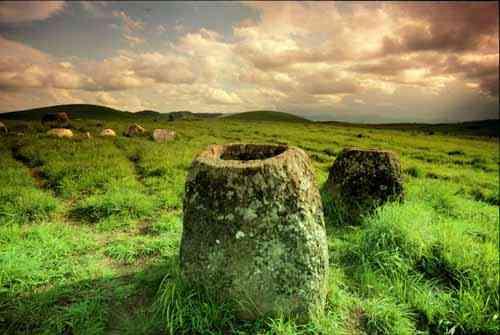
On a windy plateau some 1050 m above sea level in northern Laos, hundreds of one-to-three metre tall stone urns, some weighing as much as six tonnes, lie scattered across a grassy plain. The local inhabitants say that the jars were made to ferment wine to celebrate a great military victory 1,500 years ago.

The jars are at least as old as the legend claims, but if any were used for making wine, that was not their original function. In the 1930s, French archaeologist Madeline Colani documented the jars in a 600-page monograph, The Megaliths of Upper Laos, concluding that they were funerary urns carved by a vanished Bronze Age people.

Getting to Xieng Khouang Province, where the plain is located, unless you have an ox cart, is a choice between taking the nine to ten hour bus journey (60,000 kip) from either Luang Prabang or Vientiane or to fly. Internal flights from Vientiane with Laos Airways to the airport at Xieng Khouang take about 45 minutes (US$51 single US$97 return).

As you approach the airstrip you will see thousands of bomb craters pockmarking the barren plain, a grim memento of the American presence in Southeast Asia. Phonsavan has been built over the past thirty years to replace the former provincial capital (Xieng Khouang), which was destroyed during the war.

A little more than a mile southeast of Phonsavan lies the principal jar site, called Ban Ang by Colani: sixty acres of wind-swept prairie containing more than 250 urns.

A few stone lids are scattered among the jars, some incised with a design of concentric rings. All the jars may have been fitted with lids, most of which were later pilfered. Another theory, however, is that these stone lids served some other function, and that the urns originally had wooden covers. In any case, all the jars appear to have been open to the elements for centuries.

There are several places to stay in Phonsavan.

Three to have a look at are
Kong Keo Guesthouse, Kou Kham Guesthouse and Meuang Phuane Guesthouse

Tuesday, October 11, 2005

Scams and warnings

Some recent scams and warnings from Lonely Planet

The first night I arrived in Vientiane I was walking down the street with two girl friends. We were across the street from the mekong, near a seated police officer, in a well-lit, well-traveled area. These conditions, along with the consensus suggesting how safe Laos is, lulled us into believing all was well. However, a man came running up behind us, grabbed my camera case, and struggled with me for it until the strap broke and he ran off with his prize. I screamed, but absolutely no one came to help, not even the seated police officer. My arm was hurt, scraped, bruised and swollen from the struggle, and so we went into a restaurant to recover. There we were informed that the number of attacks against women is growing tremendously along with the use of amphetamines. Every day since I have met one farang woman who has experienced a purse snatching on the same road near the river.

On the same note, one of my travelling companions, the same night I was mugged, had a man break into his hotel room at 3 am while he was sleeping. Fortunately it happened to a man big enough to shove the intruder out and barricade himself against further attack.
I'm afraid too many tourists go about here with a false sense of security. I think a more serious warning about the disintegrating situation in the capital would do some good.

Kathleen Ellen, USA (Sep 05)

I would like to let young people travelling know of the dangers of swimming in rivers and waterfalls. My daughter Mia-Lucy Rose died whilst swimming in the Li-Phi water fall on Don Det, 4000 islands, in Laos. A strong current took her legs from under her and swept over the water fall, it was three days before we found her body. There were several people swimming in the same pool as Mia There are no danger or warning signs about the water and this island is very popular with travellers from all around the world. Mia is the fourth person to die in this way at the same spot. Apparently there was a message written in German (a paper note covered in plastic pinned to a tree) giving warning as a young man had died there recently.
Pauline Rose, UK (Aug 05)

For the benefit of future travellers we want to bring to your attention our bad experience with crossing the Laos-Cambodia border. There are 2 options for crossing the border and heading to Stung-Treng: pick-up truck/ bus or speed boat (the option we chose). After talking to the driver we agreed to pay 15 $ for the trip. After stamping the passports at the Cambodia immigration post and 5 minuets crossing ... the boat engine conveniently broke down in front of the driver's village.(not the usual route we learned after). 10 minutes after we got stuck, a friend of the driver came and offered to take us for 60$. We asked him to take us back to the border (we were stuck in the village with no other transport) in the hope of finding another boat for a regular price. Eventually two of our company took a small motor-boat with one of the fisherman back to the boarder. When the boat drivers found out about our plan him immediately phoned someone. When the two arrived at the border the prices were all 50-100$. The drivers also told them that they know about our "situation". In the end we were forced to pay the money. Please warn future travellers in your next edition. Even if the all scam hadn't occurred, we would have preferred to take the bus over the dangerous boat.
Ariel, Yuval, Moshe and Mayan, Israel (May 05)

I have just recently done the 1 day kayak trip from Vang Vieng to Vientiane in Laos. Here's the heads up; this is potentially dangerous, I noticed you had a tubing warning but the same should be said for kayaking. There is one set of rapids on this trip that is rated as class 3 by the tour companies. I'll confirm it, it definitely is class 3. Inexperienced paddlers should not be on this kind of water in these conditions. The rescue gear carried by the guides is non-existent, life jackets are ill-fitting and sub-standard in quality. Most guides are not trained in river rescue and could not help you if they had to. We scouted this rapid and I saw the reaction of my fellow paddlers when they saw what this rapid looked like. I have paddled water bigger than this at home and I took a step back when I saw this water, and this is the dry season.

I have extensive experience guiding school trips for my school. I have a Swiftwater Rescue course, I'm a Canadian Recreational Canoe Association certified instructor and I have a couple of White-water Canoeing certificates. I would not take a school group on this river, it must be crazy when it is the wet and the river is in flood.

Of course no one backed out of running the rapid because they may not have known the danger, and of course there is the "macho factor" as well. It was a great day I thoroughly enjoyed myself and no one got hurt. Travellers need to think big picture with these trips. If something happens on this river there is no Emergency Response team that will airlift you out of there. At home when we do these trips we expect a certain standard of care, in fact we probably don't even think about it, we just assume it's there. We assume the guides are trained and qualified, and the gear is top notch. This same standard of care just doesn't exist for this trip so travellers need to be advised of what they are potentially getting into.
Trevor Hale, Canada (Mar 05)

Monday, October 10, 2005

Bombies

Between 1964 and 1973, the United States conducted a "secret" war, dropping over two million tons of bombs on the mountains and jungles of Laos. Many of these bombs - especially a newly developed weapon called a "cluster bomb" - failed to explode when they hit the ground, leaving the landscape littered with millions of unexploded bombs, as dangerous today as when they fell from the sky three decades ago.

Dubbed "bombies" by Laotian villagers, these eye-catching but deadly orbs, as brightly coloured as exotic fruit, are still found by children playing in shallow dirt, in the clefts of bamboo branches, or in the furrows of fields where farmers still till the soil by striking the earth with a hoe.

In 1964, as the Vietnam War was intensifying, the United States attempted to staunch the flow of North Vietnamese people and supplies moving along the Ho Chi Minh Trail, which detoured through Laos before heading into South Vietnam. Laotian Communists, backed by North Vietnam, were fighting in a civil war against the U.S.-supported Royal Lao government. Because the United States signed the 1962 Geneva Accords prohibiting American military involvement in Laos, the bombing, organized by President Kennedy, the CIA and the Air Force, was kept secret, both from Congress and from the American people, to pursue a covert strategy for ridding the countryside of Communists. Initial targets were Communists troops, supply depots and lines of communication. Later, to prevent the soldiers from having access to men and materials, the U.S. began to bomb farms, villages and towns.


The consequences for Lao civilians were devastating. American planes delivered the equivalent of a B-52 planeload of bombs every eight minutes, 24 hours a day, for nine years. More bombs were dropped on Laos at that time than on Germany and Japan combined during World War II.

In the last three decades more than 12,000 people, many of them children, have been killed or injured by bombies or other unexploded ordnance (weapons). With an estimated 90 million cluster bombs dropped on Laos, many experts consider Laos to be the most heavily ordnance-contaminated country in the world.

Thursday, October 06, 2005

Cafe Lao

Around 100 or so years ago the French colonialists planted coffee in the southern highlands of Laos on the Bolaven Plateau, and since independence, the (mostly small) plantations have continued. Coffee from Laos is not widely known because most of the country's small export quantities have previously gone to France - the old colonial connection. However nowadays Laotian coffee is now exported all over the world.

In Laos, you need to learn to order "Cafe Lao Dam" (Black Laos Coffee), and if you don't take sugar, add "Baw Sai Nam Tan." The Lao people tend to drink their coffee very strong - beans are roasted to a coal black, and they mostly add condensed milk. They use lots of ground bean in a muslin bag to soak in hot water for their brew. Here we're talking serious black caffeine syrup, and if you don't want an involuntary hyperactivity attack, you also need to say "Nam Hawn" (sounds like "numb horn") to get a glass of hot water for diluting purposes.

“Kafae thung”, literally means 'bag coffee' and it is, quite simply, thick, strong and sweet. Why 'bag coffee'? Well, that refers to the traditional method of making Thai coffee, that is by filtering hot water through a bag-shaped cloth filter - there have even reportedly been times that the ubiquitous sock has been used as a subsitute....

It is customarily seen in Thai outdoor morning markets, though one can find it in Bangkok at almost any hour of the day, being one of the favourites of street vendors. Kafae thung, is typically mixed with sweetened condensed milk and, sometimes sugar...however, if you would like it less sweet, do be sure to tell the vendor beforehand - say mai sai naam-taan (condensed milk but no sugar). You like your coffee black? Well then say "kafae dam".

To have a really good cup of this brew, it is recommend going south, the best versions are made and enjoyed in the Hokkien-style cafés in the southern provinces. It is without a doubt a-roy (delicious).

Adapted from an article by John McBeath

Tuesday, October 04, 2005

Laos Airlines

International Flights

Laos Airlines offers international services from Vientiane to Bangkok (daily), Chiang Mai(Tue, Fri, Sun), Hanoi (Daily), Phnom Pehn (Daily), Siem Reap (Wed, Fri, Sun), Kunming (Wed, Sun). From Luang Prabang to Chiang Mai (Tue, Fri, Sun) and from Pakse to Siem Reap (Wed, Fri, Sun)

Domestic Flights

Laos Airlines offers multiple flights from Vientiane to the following provincial capitals: Luang Prabang (daily), Savannakhet (daily), Luang Namtha (Mon, Wed, Fri, Sun), Xieng Khouang (daily), Pakse (daily), Oudomxai (Tu, Th, Sat, Sun), Xayyabuli (Mon, Wed, Fri, Sun), Houixay (Mon, Wed, Fri, Sat), Thakhek (Fri), and Saravane (via Savannakhet, Sun. only).

Fares and booking

The Laos Airlines website contains details of fares. The site does not deal with reservations or online booking. If you wish to book in advance you should use a reputable agency such as Traveller 2000 who will deliver tickets internationally and within Thailand where they are based.

Aircraft

Lao Airlines operates a fleet of Airbus A320s, Aerospatiale ATR72s and Chinese built Y12’s on domestic and regional international routes from its main base at Vientiane (Wattay) Airport. International flights are usually serviced by the airline's new Airbus A320-200.

Safety


There are quite a few references to Lao Airlines not maintaining its planes but its safety record doesn't seem to be poor – its planes keep flying. (The last recorded fatalities were in October 2000 and all accidents recorded by Airlines Safety Network concerned the Chinese or Russian built aircraft.)

Saturday, October 01, 2005

Climate in Laos

The climate throughout Laos is monsoonal. There are three distinct seasons with some variations between north and south. In general, it is wet between May and October and dry between November and April.
  • The cool dry season occurs from November to January. In the Mekong valley, temperature can drop to around 15 degrees Celsius and the mountain temperature drop to zero degrees celsius or lower at night. Humidity is low at this time of the year and the most visitors consider it the best time to travel to Laos.
  • The hot dry season follows through May. And toward the end of this period, there is high humidity and thunderstorms. Temperature can reach 35 degrees celsius.
  • The wet season generally lasts from June until October. It is typified by a consistent pattern of low clouds and rain. Flooding occurs along the Mekong River and some tributaries. The average rainfall in the capital Vientiane is 1,700 mm, although in the north of Laos and the highlands it is wetter, with more than 3,000 mm each year.

Tuesday, September 27, 2005

Slowboat versus Speedboat

The slowboat currently costs 85.000 kip from Louang Prabang to Pakbeng, and the same amount from Pakbeng to Houay Xai

The slowboats leave from the boat pier behind the Royal Museum at about 08:30.

Commonly known as the “backpacker express” they take one day for each leg, depending on time of year (dry or wet season) and whether upstream or downstream each leg takes 7-11 hours. Occasionally the total journey can take more than two days upstream in the dry season.

If you get the slowboat from Pakbeng to Houay Xai you will have to stay in Laos overnight as slowboats hardly ever dock before the border crossing closes.

The boats are often crowded and uncomfortable, standards vary and they are all full of other ‘farang’.
You may be on a different boat on day two from the one you travelled on in day one even if you buy a combined ticket all the way from louang Prabang to Houay Xai.

“The boat was already over-full and struggling when we picked up an extra 7 westerners and backpacks. The journey had been slow because the boat was already overloaded before the additional passengers, we were running late and it was beginning to get dark. Just as we came out of a set of rapids, the engine failed, the water pump stopped working and the boat began to sink. We paddled to the bank and managed to get ourselves and our backpacks out before the boat sank. Within 15 minutess it was pitch black. We did managed to bail the boat out and salvage it but resigned ourselves to a night in the jungle on the river bank”

However the scenery is good, you get the chance to talk to other people and are not contributing to some of the ecological pollution of the speed boats.


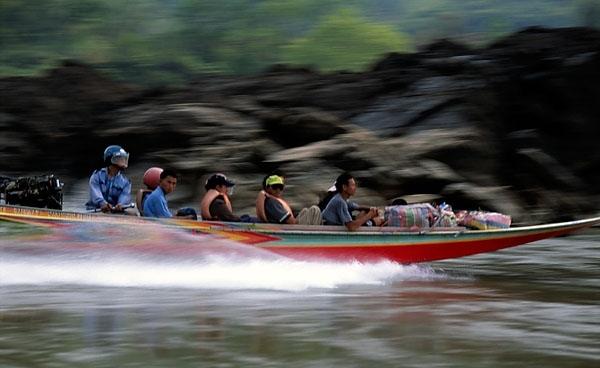
The speedboat cost 150,000 kip from Louang Prabang to Pakbeng, and the same from Pakbeng to Houay Xai.

They leave Louang Prabang from the speedboat station 7kms north of the citynear the northern bus station. They start to leave at 08:30 and get in to Houyxai around 15:00 – 16:00 with ample time to cross the border.

You will be equipped with a motorcycle helmet, lifejacket and should take earplugs with you.

Many people say the speedboats should be avoided for some of the reasons below.

They are extremely cramped, very very noisy and it can be cold

“These boats are small, so that you have to sit on the floor of the boat; imagine trying to sit in (not on) a milkcrate, with your legs packed in and your chin resting on your knees - well, not so much resting as crushed up against it”

“Imagine the world's loudest chainsaw. Imagine putting it right next to your ear. Then imagine running the chainsaw for 6 straight hours”

"They are a menace to those living by the river and the wild life. Also with logs etc, brought down by the river in the rainy season, they can be dangerous."

“My fillings fell out, my ears became joined at the back of my head, the driver was high (on something) I needed my hips and knees replaced I also had bruises on my arse that had to be seen to be believed (not that I showed anybody), and I have been obliged to wear a hearing aid ever since. In one very short sentence you would have to be completely nuts to even think about taking the speedboat.”

However some people prefer them and like the sense of adventure they bring and sometimes if short of time or at the end of your visa you may have no other alternative.

(All quotes Lonely Planet Thorn Tree)

Houay Xai - food and accommodation

Looks like I will be staying the night here as the slow boats don't reach Houay Xai until after the border crossing shuts (deliberately or otherwise).

The settlement of Houay XaiI , sandwiched between the Mekong and a range of hills, is a popular border crossing with Thailand . Thirty-day Thai visas are available on arrival in Chiang Khong on the Thai side.

Once you're across the Mekong and past immigration (daily 8:00-17.30), you can get one of the regular buses to Chiang Rai (2-3hr) or Chiang Mai (5-6hr).

Houay Xai's only real sight is hilltop Wat Chom Khao Manilat , boasting a tall, Shan-style building of picturesquely weathered teakwood, now used as a classroom for novice monks.

Thaveesinh Guesthouse seems to have all the amenities and sells boat and bus tickets. Also worth a look might be Friendship Guesthouse with its rooftop balcony.

The no-frills Mouang Neua restaurant dishes out decent Lao and Chinese meals - the vegetable omelette is good. The lively Nutpop, a few blocks north, does stir-fry dishes to order, cold beer and delicious fruit smoothies, while nearby Ban Midtapab offers excellent fish and views across the Mekong.

The Riverside restaurant is located looking out over the river. The setting is pleasant and they serve traditional Lao dishes as well as the usual fried rice and noodle favourites. Their Sindad, a Lao favourite, a type of soup/grilled meat do it yourself barbecue at the table comes recommended.

Saturday, September 24, 2005

Louang Prabang - ideas for what to do

Probably three days here. Haven’t really thought what to do yet, but relaxing, eating and drinking comes high on the list. Should hire a bike and see a few of the following:

Wat Mai Photisarath: next to the Royal Palace. 8:00-17:00 Entry fee 5,000kip, Built between 1718-1788, Considered to be one of the most beautiful temples in Laos. It used to house one of the most important Buddha Statues in Asia - 'Pha Bang Buddha', 50kg pure Gold Buddha, now it's supposedly stored in a Bank. Bas-reliefs on the walls are beautiful.

Royal Palace Complex: on the main Road. Royal Palace: National Museum & Royal Apartments. Monday to Friday 8:00-11:00, Entry fee 10,000kip. Built in 1904 by King Sisavangvong, a mix of French/Lao design. It is said to have one of the best, most interesting collections in South East Asia. One of the highlights is the copy of 'Pha Bang Buddha'- the Golden Buddha.

Mount Phousi: (Sacred Hill) Opposite the Royal Palace. Entrance from the Main Road. Rear gate is now closed The hill has 328 steps. The best sunset views of the city from the top. Entry fee 8,000kip. Inspectors are everywhere. Not possible to bunk in. After 20:00 free to climb up.

Wat Xieng Thong: (Copper Tree Temple Complex) East end of town. 7:00-17:00 Entry fee 5,000kip, Built in 1559 by King Setthathirat. The oldest temple in Louang Prabang. Architecturally the finest example of Classical North Lao temple design. Its huge, multi-layered roofs that almost touch the ground, are ornately decorated and have many small pagodas on the top. This wat houses the king's funeral chariot.

Pak Ou Caves: Entry fee 6,000kip 25km upstream from Luang Prabang, by boat - 2 hours to go & 1 hour to come back. Beautiful riverside scenery en route. There are two caves, Tham Ting and Tam Phum, full of thousands of Buddha images. Take a torch.

Kwang Xi Waterfalls: 30km South of Luang Prabang, tuk-tuk charter 4-50,000kip. Entry fee 10,000kip. Waterfalls and beautiful pools in a forest setting. Pass through rice terraces, teak groves and local villages en route.

Thursday, September 22, 2005

Vang Vieng -things to do

Land of Pizza and Friends Videos

Vang Vieng is a small town/village surrounded by limestone karst mountains and rivers. The main attractions are caves, Hmong villages, and the natural mountain scenery. A favourite with travellers - many stay longer than planned. However many say this town has become too popular and now has a reputation as a party village.

I intend to stay here one or two days depending on how I feel about it. However it is a good stop off point between Vientiane and Louang Prabang

Things to do:

Tham Chang: 2km from the town centre. This is a popular trip by bicycle. 7:30-11:30, 13-16:30. Entry fee 8,000kip + 1,000kip to enter to resort, plus 500kip for bicycle. There are beautiful views of the village and rice fields from here. This cave is well lit with a fairy tale atmosphere.

Tham Poukham: S of town on other side of river. Walk/bicycle 7km W(Go W 5km then turn right and go another 2km.). Cross a bridge and take a tuk-tuk waiting the other side, 3000kip/p, and walk 1km. Entry fee 3000kip, 9-17:00, A big cave with a sleeping Buddha inside. Simple food and drink are available.

Tubing on the river: 5000kip/p including tube rental and the tuk-tuk ride to the 4km point. From here it 3- 5 hours back to town. Numerous bars along the river banks for a cool Bia Lao and relaxing.

Kayaking Tour: 72,000kip/p Wild Side Eco Tour T511-230 or at Xayon Bar. Departs 9:30, back by 17:00. Including Hmong village, caves, Hanging Bridge, BBQ for lunch, organic farm and kayaking

One Day Vang Vieng Tour: A few agents organize tours around Vang Vieng including caves, Hmong villages, lunch and finishing with tubing. Leaving around 9-10:00 and coming back around 17:00.

Tuesday, September 20, 2005

Vientiane - things to see

Most of Vientiane's sights are spread around the town. I will probably hire a bicycle as this has been recommended as the best way to get around. Rental costs about 4000+kip/day.

A few things to look at could be:

Wat Pha Kaew: (Temple of the Emerald Buddha) Setthathirat Rd. E of President Palace, in front of Wat Sisaket. Entry fee: 1,000kip 8:00-12 & 13:00-16

Wat Sisaket: Lane Xang Rd + Setthathirat Rd. opp. from Wat Pha Kaew, Wat is free but the museum 1,000kip 8:00-12 & 13-16:00 The oldest original temple in Vientiane, built by King Anou in 1818. Houses more than 2,000 small Buddha statues, brought here by devotees.

Anousavari Monument: The triumphal arch of Vientiane built in 1962. NE of Lane Xang Rd. Monument for the people who died in wars defending the country. It is possible to climb up the Monument 1,000kip 8:00-17:00

That Luang: The holiest Stupa in Laos, 3km NE from center of the town along Lane Xang Rd. Built by King Settathirat in 1566. Very unique-shaped Stupa and the most important religious symbol of the country. 2,000kip 8-12, 13-16:00

Lao National Museum: Samusenthai Rd. W from Lao Plaza Hotel 3000k 8-12, 13-16:00 A lot of propaganda.

Friday, September 16, 2005

Laos Food

Rice and particularly sticky is the foundation for all Lao meals, and almost all dishes are cooked with fresh ingredients such as vegetables, freshwater fish, poultry, duck, pork, beef or water buffalo. Lime juice, lemon grass and fresh coriander give the food its characteristic tang, and various fermented fish concoctions are used to salt the food. Chillies, garlic, mint, ground peanuts, tamarind juice and galangal are also often used just like in Thai cuisine.

Lao meals typically consist of a soup dish, a grilled dish, a sauce, greens, and a stew or mixed dish (koy or laap).


Dishes are often served alongside a plate of lettuce, mint, coriander, mung-bean sprouts, lime wedges or basil, which are wrapped in the lettuce to accompany the food.

Another distinctive characteristic of Lao food is that food is frequently eaten at room temperature. This may be attributable to the fact that Lao food served with sticky rice is traditionally handled by hand.

Thursday, September 15, 2005

Bia Lao

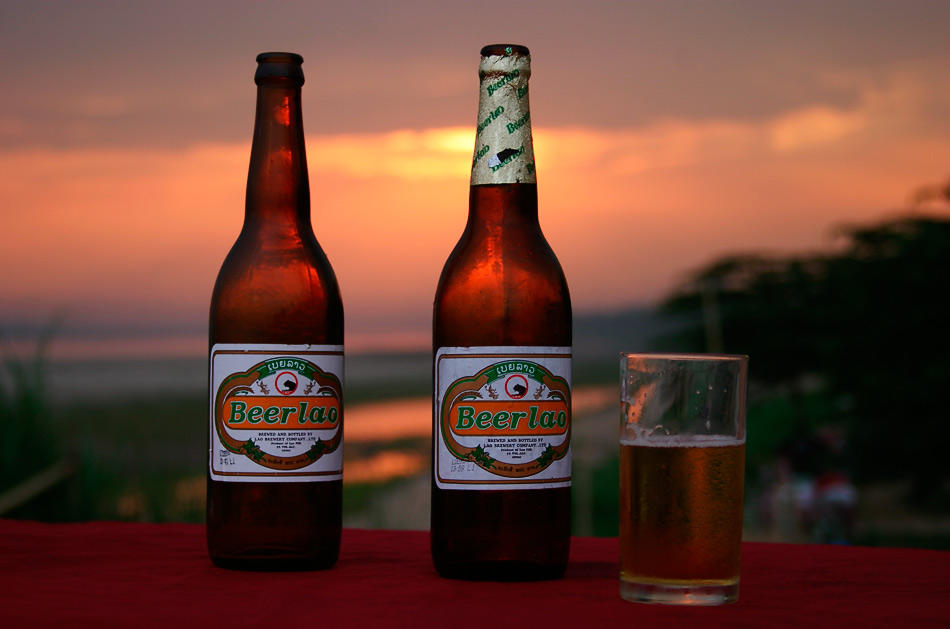
Bia Lao with 5% volume of alcohol is distributed to every part of the country and has a 98% market share. Bottled since 1973 on the outskirts of Vientiane by the Lao Brewery Co., is an arrestingly crisp brew. There's no stinting on quality: Bia Lao is made from Pilsen malt imported from France, Hallertauer Magnum hops and dry yeast from Germany, and local rice and springwater.
These are some of factors that have propelled Bia Lao to the top of Asia's beer league. It is said wherever you are in the world, one sip of Bia Lao and you are instantly transported to a riverside bistro in Vientiane. The long lunches, the French-colonial streets, the wats and murmuring monks or memories of your head down a toilet: it all comes back with exquisite precision.


Breaking News!

Lao Brewing Co, announced on the 29th September the launch of three new products, including Carlsberg brewed in Laos under license and two new forms of Beerlao – a dark and a light beer. Carlsberg will be on sale in the first week of October, the two other beers will hit retail outlets in the middle of October

The price of the new beers is based on their alcoholic content. The dark beer has an alcohol volume of 6.5 percent while the light beer has a much lower alcohol content of 2.9 percent.

Link to full Vientiane Times article

Tuesday, September 13, 2005

Getting around by bus

Ordinary buses run between major towns and link provincial hubs with their surrounding districts. Operating out of Vientiane, a fleet of slightly more comfortable blue, government-owned buses caters mostly to the capital's outlying districts, although it does provide a service to Vang Viang and Pakxe.

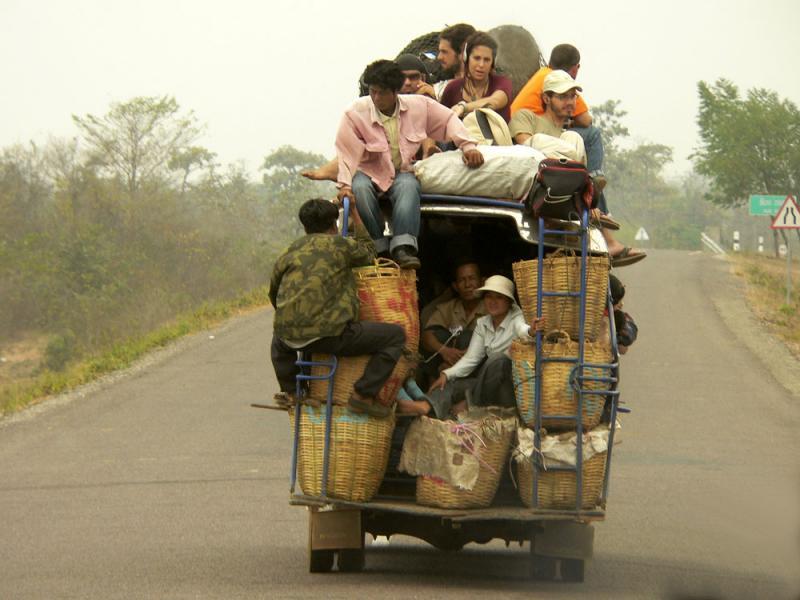
Buses plying long-distance routes tend to be in worse shape and can be either classic buses or souped-up tourist vans. Throughout the south and along the Vientiane-Louang Prabang route, the transport mainstay is a converted Russian flat-bed truck.

Except for buses out of Vientiane, Savannakhet and Louang Prabang, when you should buy a ticket from the bus station before boarding, it's common practice to pay on board .

Timetables only exist in Vientiane, Louang Prabang and Savannakhet; elsewhere it's best to go to the bus station the night before to find out the schedule for the next day. Where there is no information, you should get to the bus station between 6 and 7am, as that is when most Lao passengers prefer to travel. Very few buses leave after midday . Even though they're scheduled, long-distance buses won't depart if empty. Route 13, however, sees a steady flow of bus traffic and it's usually possible to flag down a vehicle during daylight hours.

VIP or Mini-bus?

Minibuses are more expensive, however that does not mean they are necessarily better. The VIP Bus is just an old bus by Western standards, although it typically does have more leg room which makes a long journey far more pleasant. Both vehicle types are usually air conditioned. A VIP Bus is slower and more prone to breakdowns however.

Friday, September 09, 2005

Money, Money, Money

Looks like I will be spending about 10 days in Laos and 5 days in Thailand. My budget for Thailand is £20 a day (1400 baht) and for Laos about £15 per day ($27). This includes all transport and accommodation and food apart from the two internal flights within Thailand I have already booked. This does not include the $30 Laos visa.

The currency in Laos is the Kip and the exchange rate is currently 20,000 kip to the British Pound or about 10,800 to the US dollar. I will take $300 into Laos and change some into Kip as required as the largest note is 5,000 kip. Most large expenses such as accommodation and transport can be paid for in US dollars. Food and drink will be Kip.

I may have overestimated the costs in Laos some people reckon on about $15 a day but best to have some in reserve.

Thursday, September 08, 2005

Alternative Route Louang Prabang to Houay Xai

The more I think about it the more tempted I am to give up one day in Vang Viang and not take the “backpacker express” slow boat from Luang Prabang to Houay Xai.

The alternative is to to take an eight hour slowboat up the Nam Ou river to Nong Kiaow/ Muang Ngoi and then overnight at Nong Kiaow. From there it will be overland to Houay Xai via Udomxai. I would probably need to allow three days for this alternative route hence one day less in Vang Viang.

Places to stay in Nong Kiaow that look interesting are Sunset Guesthouse and Sengdao Bungalows and Restaurant


Wednesday, September 07, 2005

Internal flights in Thailand

Have now booked two internal flights within Thailand both using Thai Air Asia. There are an ever increasing number of low cost no-frills airlines operating in South East Asia.


All of them have English language web pages and most allow the use of European or North American issued Visas or Mastercard credit cards for online booking. Most issue e-tickets.

Thailand

www.airasia.com - AirAsia
www.bangkokair.com - Bangkok Airways
www.nokair.com - Nok Air
www.onetwo-go.com - One-Two-Go
www.orient-thai.com - Orient Thai Airlines
www.pbair.com - PB Air
www.phuketairlines.com - Phuket Airlines
www.thaiair.com - Thai Airways International
www.thaiskyairlines.com - Thai Sky Airlines

Laos
www.laoairlines.com - Lao Airlines

The flights I have booked are:

Thu 24 Nov - Air Asia - Bangkok to Udon Thani departs 16:15
499 baht – (1058 baht including taxes)


Wed 07 Dec – Air Asia – Chiang Rai to Bangkok departs 08:20
499 baht – (1058 baht including taxes)

Tuesday, September 06, 2005

Itinerary

This is the first attempt at an itinerary for 15 days in Thailand and Laos during November and December 2005.

I am still in two minds as to whether I should miss out Vang Viang entirely and go by boat from Louang Prabang to Nong Khiaw and then overland to Louang Nam Tha and on to Houayxai.

This would undoubtedly be more fun than the slowboat from Louang Prabang to Houayxai and would take about four days (assuming nothing breaks down and there are no sudden downpours) but I also need make sure that I am back in Thailand on Tuesday 06 December at the latest.

Wed 23 Nov Manchester to Bangkok
Thu 24 Nov Bangkok to Nong Khai
Fri 25 Nov Nong Khai
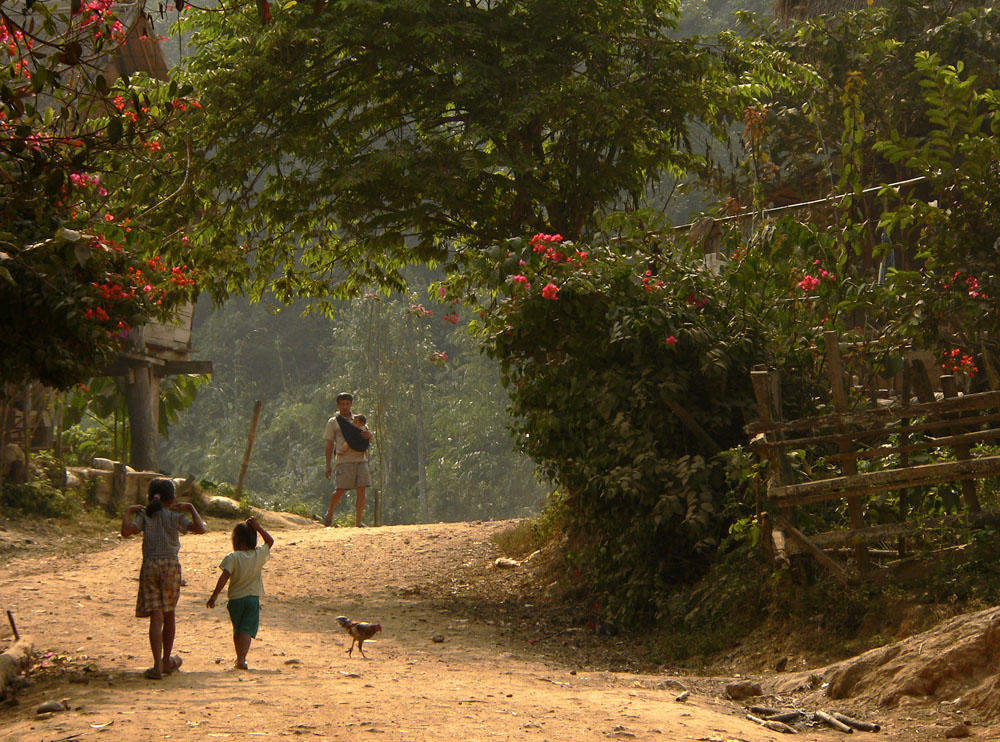
Sat 26 Nov Nong Khai to Vientiane
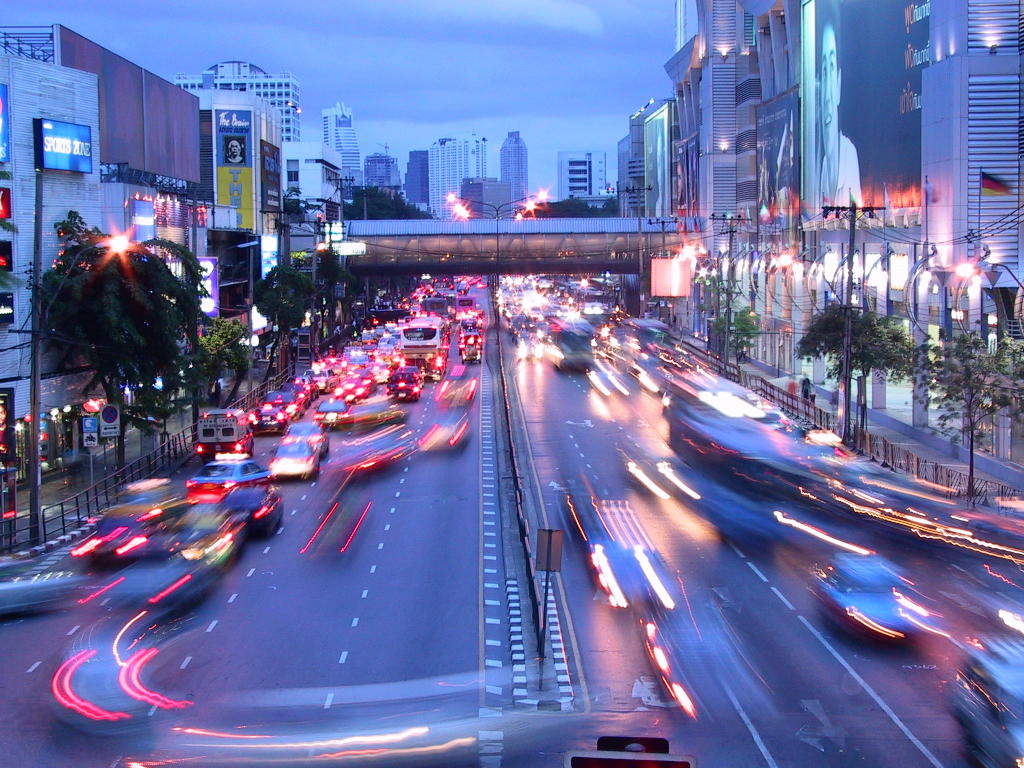
Sun 27 Nov Vientiane
Mon 28 Nov Vientiane to Vang Viang
Tue 29 Nov Vang Viang
Wed 30 Nov Vang Viang
Thu 01 Dec Vang Viang toLouang Prabang
Fri 02 Dec Louang Prabang
Sat 03 Dec Louang Prabang
Sun 04 Dec Louang Prabang to Pakbek
Mon 05 Dec Pakbek to Houayxai/Chiang Khong
Tue 06 Dec Chiang Khong to Chiang Rai
Wed 07 Dec Chiang Rai to Bangkok
Thu 08 Dec Bangkok to Manchester

Monday, September 05, 2005

Chiang Rai to Bangkok

If all goes to plan (it wont!) it will be time to get down to Bangkok fo the last couple of days of this trip.

I have booked the 08:15 Air Asia flight from Chiang Rai to Bangkok and made a reservation at the venerable Suk 11 for one night.

This gives me a full two days in Bangkok and hopefully a chance to visit some old haunts or just a bit of flexibility should a bus/boat or two break down. The next thing I need to do bring all these ramblings together into some sort of itiniery.

Chiang Khong to Chiang Rai

Although I have been to Chiang Mai several times I have never made it to its little brother Chiang Rai. So I thought a night here would be fun.

In all probability I will get a bus early morning from Chiang Khong to Chaing Rai . I dont really like arriving places in the evening so I think a night in Chiang Khong is probably the best idea.

Not much idea of guesthouses in Chiang Rai but there are plenty maybe try Baan Warabordee Guesthouse or Jitaree Guesthouse.

Travelfish recently recommended Ben Guest House, 4/4 Chiang Mai-Lamphun Rd. Soi 2, A. Muang, Chiang Mai 50000 Tel. 053 244103

The plan is for one day and night in Chiang Rai then onwards to Bangkok the next day.

Some places I have heard are good arethe Gallery left hand side of the Wiangcome Hotel for the best breakfast and coffee and the Chay Naam next to the river for Thai food in the evening.

Houayxai to Chiang Khong
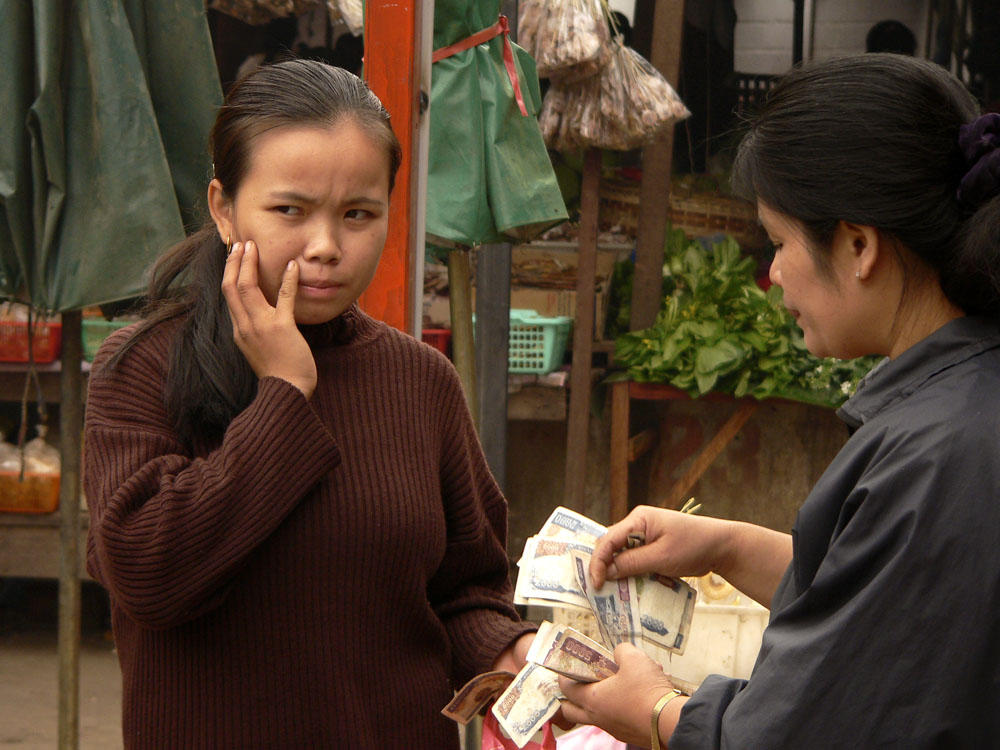
The plan is to cross over the Laos-Thai border at Houayxai as soon as the slow boat docks and, depending on time, either get a bus straight to Chiang Rai or stay overnight in Chiang Khong.

Accommodation options in Chiang Khong are Baan Rim Ta Ling Guesthouse and Homestay or the Chiang Khong River View Inn.


I need to be back in Bangkok on the 7th December. However it is the kings birthday on the 5th December and I am not sure what the transport situation is going to be like as its a Public Holiday

I may fly from Chiang Rai to BKK with Air Asia.

Sunday, September 04, 2005

Louang Prabang to Houayxai

This bit of the trip is causing me some concern. I would really like to take the boat from Luang Prabang to Nong Khiaw and then overland to Luang Namtha and onwards to Houayxai. Unfortiunately I am just not going to have the time to do this unless I find Vang Vieng to be (pizzas and episodes of Friends etc) so bad that I leave after one day.

So it looks as it may have to be the slowboat from Louang Prabang to Houayxai staying overnight at Pakbeng. The boat leaves from the boat pier behind the Royal Museum tickets cost 88,000 kip to Pakbeng, where onward tickets can be bought for Huay Xai fore about the same price

Accommodation in Pakebeng it looks like a choice between Donevilasack Guesthouse or the Bounmy Guesthouse.

Friday, September 02, 2005

Vang Viang to Louang Prabang

After three or four days in Vang Viang the provisional idea is to head north to Louang Prabang.

This is already starting to look like a mad dash around Laos. I really think another week would have been better but I shouldn’t moan a lot of people never have the chance or money to do this type of thing.

The bus to Louang Prabang takes 6 - 8 hours (bus and road conditions permitting) arriving early afternoon or a minibus taking about 5 hours.

There seems to be no end of accommodation places I am looking at are:

Levady Guesthouse
Sisavangvong Rd Louang Prabang Tel: (071) 254 434, (020)
563 4769
Merry Guest House 1
Central Luang Prabang Louang Prabang Tel: (071) 252 325

Rattana Guesthouse
4/2 Baan Wat That Louang Prabang Tel: (071) 252 255

Plan to stay two or three days here before moving on towards Houayxai